Deep-Sea Mining: Who Decides the Future of the Seafloor | Part 4 | SLICE EARTH
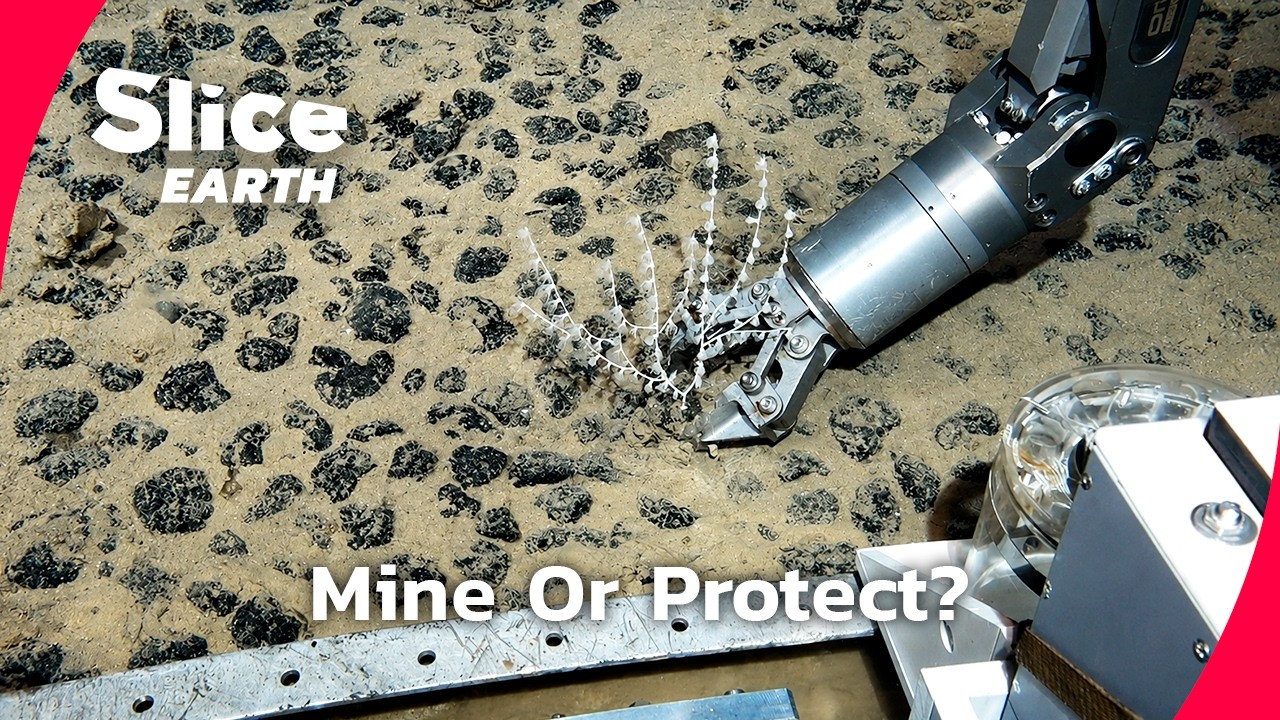
Using AUV imaging and sediment cores, scientists return to a deep-sea test site where tracks were left on the seabed 26 years earlier. The results reveal how slowly the ocean floor can recover, and why manganese nodule mining could leave long-term damage in one of Earth’s least understood environments.
The extract expands from scientific evidence to the global decisions now taking shape: mining licenses, the International Seabed Authority, Nauru, industrial interests, and the deep ocean’s role in carbon and oxygen cycles. Before the seafloor is opened to large-scale extraction, one question remains: who gets to decide its future?
Documentary: Gold Rush in the Deep Sea
Director: Friederike Lorenz & Tamar Baumgarten-Noort
Production: Gruppe 5, ZDF, ARTE (2016)
#deepseamining #seabedmining #manganesenodules #oceanfloor #deepsea #internationalseabedauthority #nauru #marineconservation
The extract expands from scientific evidence to the global decisions now taking shape: mining licenses, the International Seabed Authority, Nauru, industrial interests, and the deep ocean’s role in carbon and oxygen cycles. Before the seafloor is opened to large-scale extraction, one question remains: who gets to decide its future?
Documentary: Gold Rush in the Deep Sea
Director: Friederike Lorenz & Tamar Baumgarten-Noort
Production: Gruppe 5, ZDF, ARTE (2016)
#deepseamining #seabedmining #manganesenodules #oceanfloor #deepsea #internationalseabedauthority #nauru #marineconservation

SLICE Earth
SLICE Earth is an inspiring encounter with people around the world taking innovative steps to protect and restore our planet.
SLICE Earth is a channel created and managed by independent producer and distributor ZED. For 30 years, ZED produces and distri...