Why Are Some People Mosquito Magnets?
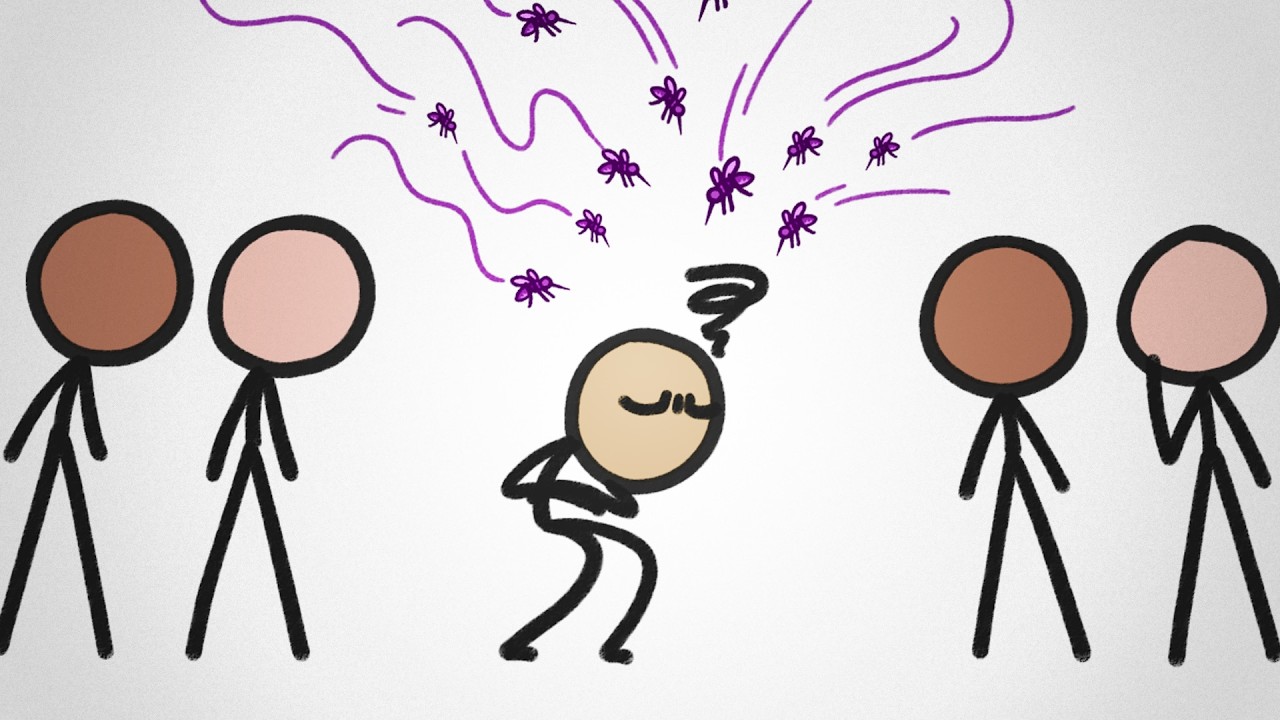
Some people just seem to be mosquito magnets; in one scientific study, 20 percent of the people ended up with 95 percent of the mosquito bites! So if you’ve ever thought mosquitoes had it out for you specifically, you might be right. And now, we know why.
LEARN MORE
**************
To learn more about this topic, start your googling with these keywords:
- Carboxylic Acid: An organic compound characterized by a carboxyl group (-COOH), which consists of a carbon atom double-bonded to an oxygen atom and single-bonded to a hydroxyl group.
- CO2 (Carbon Dioxide): A colorless gas made of one carbon atom bonded to two oxygen atoms (CO2).
- Wavelength: The distance between two consecutive peaks (or troughs) of a wave, such as a light wave or sound wave.
SUPPORT MINUTEEARTH
**************************
If you like what we do, you can help us!:
- Become our patron: https://patreon.com/MinuteEarth
- Our merch: store.dftba.com/me
- Our book: https://minuteearth.com/books
- Sign up to our newsletter: http://news.minuteearth.com
- Share this video with your friends and family
- Leave us a comment (we read them!)
CREDITS
*********
Cameron Duke | Script Writer, Narrator and Director
Arcadi Garcia i Rius | Storyboard Artist
Sarah Berman | Illustration, Video Editing and Animation
Nathaniel Schroeder | Music
MinuteEarth is produced by Neptune Studios LLC
https://neptunestudios.info
OUR STAFF
************
Lizah van der Aart • Sarah Berman • Cameron Duke
Arcadi Garcia i Rius • David Goldenberg • Melissa Hayes
Henry Reich • Ever Salazar • Leonardo Souza • Kate Yoshida
OUR LINKS
************
Youtube | https://youtube.com/MinuteEarth
TikTok | https://tiktok.com/@minuteearth
Twitter | https://twitter.com/MinuteEarth
Instagram | https://instagram.com/minute_earth
Facebook | https://facebook.com/Minuteearth
Website | https://minuteearth.com
Apple Podcasts| https://podcasts.apple.com/us/podcast/minuteearth/id649211176
REFERENCES
**************
Alonso San Alberto, D., et al (2022). The olfactory gating of visual preferences to human skin and visible spectra in mosquitoes. Nature Communications, 13(1), 555. https://doi.org/10.1038/s41467-022-28195-x
De Obaldia, M. E., et al (2022). Differential mosquito attraction to humans is associated with skin-derived carboxylic acid levels. Cell, 185(22), 4099–4116.e13. https://doi.org/10.1016/j.cell.2022.09.034
Ellwanger, J. H., da Cruz Cardoso, J., & Bogo Chies, J. A. (2021). Variability in human attractiveness to mosquitoes. Current Research in Parasitology & Vector-Borne Diseases, 1, Article 100058. https://doi.org/10.1016/j.crpvbd.2021.100058
Fernández-Grandon, G. M., et al (2015). Heritability of attractiveness to mosquitoes. PLOS ONE, 10(4), Article e0122716. https://doi.org/10.1371/journal.pone.0122716
Herre, M., et al (2022). Non-canonical odor coding in the mosquito. Cell, 185(17), 3104–3123.e28. https://doi.org/10.1016/j.cell.2022.07.024
Lindsay, S. W., et al (2000). Effect of pregnancy on exposure to malaria mosquitoes. The Lancet, 355(9219), 1972. https://doi.org/10.1016/s0140-6736(00)02334-5
Liu, F., et al (2023). Engineered skin microbiome reduces mosquito attraction to mice [Preprint]. bioRxiv. https://doi.org/10.1101/2023.12.20.572663
Mozūraitis, R., et al (2025). Zika virus modulates human fibroblasts to enhance transmission success in a controlled lab-setting. Communications Biology, 8(1), Article 139. https://doi.org/10.1038/s42003-025-07543-9
van Breugel, F., et al (2015). Mosquitoes use vision to associate odor plumes with thermal targets. Current Biology, 25(16), 2123–2129. https://doi.org/10.1016/j.cub.2015.06.046
Verhulst, N. O., et al (2011). Composition of human skin microbiota affects attractiveness to malaria mosquitoes. PLoS ONE, 6(12), Article e28991. https://doi.org/10.1371/journal.pone.0028991
Westbury, R. (n.d.). Itching for truth: Why are some people mosquito magnets? Contact Magazine, The University of Queensland. https://stories.uq.edu.au/contact-magazine/itching-for-truth-why-are-some-people-mosquito-magnets/index.html
Zhang, H., et al (2022). A volatile from the skin microbiota of flavivirus-infected hosts promotes mosquito attractiveness. Cell, 185(14), 2510–2522.e16. https://doi.org/10.1016/j.cell.2022.05.016
LEARN MORE
**************
To learn more about this topic, start your googling with these keywords:
- Carboxylic Acid: An organic compound characterized by a carboxyl group (-COOH), which consists of a carbon atom double-bonded to an oxygen atom and single-bonded to a hydroxyl group.
- CO2 (Carbon Dioxide): A colorless gas made of one carbon atom bonded to two oxygen atoms (CO2).
- Wavelength: The distance between two consecutive peaks (or troughs) of a wave, such as a light wave or sound wave.
SUPPORT MINUTEEARTH
**************************
If you like what we do, you can help us!:
- Become our patron: https://patreon.com/MinuteEarth
- Our merch: store.dftba.com/me
- Our book: https://minuteearth.com/books
- Sign up to our newsletter: http://news.minuteearth.com
- Share this video with your friends and family
- Leave us a comment (we read them!)
CREDITS
*********
Cameron Duke | Script Writer, Narrator and Director
Arcadi Garcia i Rius | Storyboard Artist
Sarah Berman | Illustration, Video Editing and Animation
Nathaniel Schroeder | Music
MinuteEarth is produced by Neptune Studios LLC
https://neptunestudios.info
OUR STAFF
************
Lizah van der Aart • Sarah Berman • Cameron Duke
Arcadi Garcia i Rius • David Goldenberg • Melissa Hayes
Henry Reich • Ever Salazar • Leonardo Souza • Kate Yoshida
OUR LINKS
************
Youtube | https://youtube.com/MinuteEarth
TikTok | https://tiktok.com/@minuteearth
Twitter | https://twitter.com/MinuteEarth
Instagram | https://instagram.com/minute_earth
Facebook | https://facebook.com/Minuteearth
Website | https://minuteearth.com
Apple Podcasts| https://podcasts.apple.com/us/podcast/minuteearth/id649211176
REFERENCES
**************
Alonso San Alberto, D., et al (2022). The olfactory gating of visual preferences to human skin and visible spectra in mosquitoes. Nature Communications, 13(1), 555. https://doi.org/10.1038/s41467-022-28195-x
De Obaldia, M. E., et al (2022). Differential mosquito attraction to humans is associated with skin-derived carboxylic acid levels. Cell, 185(22), 4099–4116.e13. https://doi.org/10.1016/j.cell.2022.09.034
Ellwanger, J. H., da Cruz Cardoso, J., & Bogo Chies, J. A. (2021). Variability in human attractiveness to mosquitoes. Current Research in Parasitology & Vector-Borne Diseases, 1, Article 100058. https://doi.org/10.1016/j.crpvbd.2021.100058
Fernández-Grandon, G. M., et al (2015). Heritability of attractiveness to mosquitoes. PLOS ONE, 10(4), Article e0122716. https://doi.org/10.1371/journal.pone.0122716
Herre, M., et al (2022). Non-canonical odor coding in the mosquito. Cell, 185(17), 3104–3123.e28. https://doi.org/10.1016/j.cell.2022.07.024
Lindsay, S. W., et al (2000). Effect of pregnancy on exposure to malaria mosquitoes. The Lancet, 355(9219), 1972. https://doi.org/10.1016/s0140-6736(00)02334-5
Liu, F., et al (2023). Engineered skin microbiome reduces mosquito attraction to mice [Preprint]. bioRxiv. https://doi.org/10.1101/2023.12.20.572663
Mozūraitis, R., et al (2025). Zika virus modulates human fibroblasts to enhance transmission success in a controlled lab-setting. Communications Biology, 8(1), Article 139. https://doi.org/10.1038/s42003-025-07543-9
van Breugel, F., et al (2015). Mosquitoes use vision to associate odor plumes with thermal targets. Current Biology, 25(16), 2123–2129. https://doi.org/10.1016/j.cub.2015.06.046
Verhulst, N. O., et al (2011). Composition of human skin microbiota affects attractiveness to malaria mosquitoes. PLoS ONE, 6(12), Article e28991. https://doi.org/10.1371/journal.pone.0028991
Westbury, R. (n.d.). Itching for truth: Why are some people mosquito magnets? Contact Magazine, The University of Queensland. https://stories.uq.edu.au/contact-magazine/itching-for-truth-why-are-some-people-mosquito-magnets/index.html
Zhang, H., et al (2022). A volatile from the skin microbiota of flavivirus-infected hosts promotes mosquito attractiveness. Cell, 185(14), 2510–2522.e16. https://doi.org/10.1016/j.cell.2022.05.016

MinuteEarth
Science and stories about our awesome planet!
Our staff: Lizah van der Aart, Sarah Berman, Cameron Duke, Arcadi Garcia, David Goldenberg, Melissa Hayes, Alex Reich, Henry Reich, Peter Reich, Ever Salazar, Leonardo Souza, Kate Yoshida and Jasper Palfree.
...