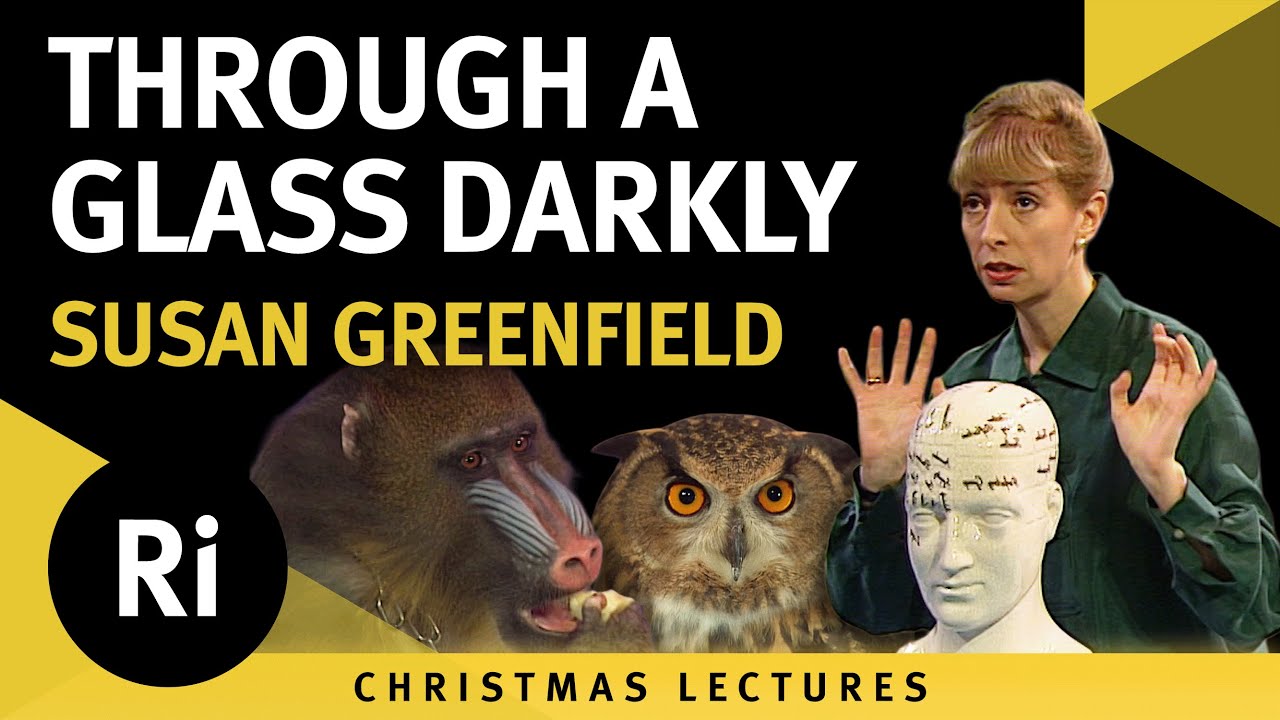
Through a Glass Darkly - Susan Greenfield's 1994 Christmas Lectures 2/5
In her second lecture, Dr Susan Greenfield studies the history of the brain - and the modern techniques we can use to study how it really works.
Watch all the lectures in this series here: https://www.youtube.com/playlist?list=PLbnrZHfNEDZxB8thM5bFRFwY5BVIBtM_O
Watch our newest Christmas lectures here: https://www.youtube.com/playlist?list=PLbnrZHfNEDZyQJZLPMjwEoOLdkFBLU2m1
This lecture was filmed at the Ri on Tuesday 20th December 1994.
--
This year marks 200 years of the Royal Institution Christmas Lectures — a world famous series showcasing science, curiosity, and mind-blowing demos, and started by the legendary Michael Faraday himself. To celebrate, we're unlocking the archive. We're uploading all the classic lectures to our YouTube channel — some not seen since they aired on TV. Sign up as a Science Supporter and get early access here: https://www.youtube.com/channel/UCYeF244yNGuFefuFKqxIAXw/join
--
Just by looking at the brain, it is impossible to guess what it is doing. So how can we study it? The Greeks reasoned that air is the most insubstantial substance there is, and so the lungs must be the most appropriate place for our insubstantial thoughts and emotions. However, once it was accepted that the brain was the place in the body where mental activity was generated, then alternative, equally 'logical', theories ensued: for example, the fluid that bathes the brain and spinal
cord was not solid like brain tissue, and thus was regarded as the seat of the soul. More recently, in the last century, the 'phrenologists' hit on the idea of allocating certain character traits to individuals according to the bumps on their head. However, this approach was discredited when it was found that the alleged centre for 'language' did not correspond to a brain area damaged in a real patient. The study of patients with brain damage has ever since provided a host of clues as to how the brain works. Another, completely different approach is to compare the skulls of the predecessors of Homo sapiens and also to identify the similarities and differences in the brains of other species. However, one of the most fruitful ways forward is to study the real brain at work. It is now possible to view on a screen images of the living brain of a conscious person as they read, think, and solve problems. According to the task being performed, different parts of the brain use up more energy, are visibly more active than other parts. We are now at a stage to ask to what extent the brain works like a computer, or indeed whether a computer could ever be conscious. The answers to these issues remain open to debate.
--
Then Dr Susan, now Baroness Greenfield (b.1950), presented the 1994 CHRISTMAS LECTURES as a five-part series, entitled 'Journey to the Centres of the Brain'. Our brains are ourselves. Every emotion, prejudice and hope is grounded in a molecular scenario somehow and somewhere in the secretive, silent organ between the ears. These lectures will explore what we know, and what still mystifies us, about the workings of the brain. Starting with no prior knowledge, we shall see what the brain looks like, how it generates electricity, and how it uses chemicals to process information. We shall be left with the thought that we know a great deal about how different brain regions function, but how such regions work together to generate a cohesive, individual individual consciousness, remains a tantalising puzzle.
--
Join this channel to get access to perks:
https://www.youtube.com/channel/UCYeF244yNGuFefuFKqxIAXw/join
Subscribe for regular science videos: http://bit.ly/RiSubscRibe
The Ri is on Twitter: http://twitter.com/ri_science
and Facebook: http://www.facebook.com/royalinstitution
and TikTok: https://www.tiktok.com/@ri_science
Listen to the Ri podcast: https://podcasters.spotify.com/pod/show/ri-science-podcast
Donate to the RI and help us bring you more lectures: https://www.rigb.org/support-us/donate-ri
Our editorial policy: https://www.rigb.org/editing-ri-talks-and-moderating-comments
Subscribe for the latest science videos: http://bit.ly/RiNewsletter
Product links on this page may be affiliate links which means it won't cost you any extra but we may earn a small commission if you decide to purchase through the link.
Watch all the lectures in this series here: https://www.youtube.com/playlist?list=PLbnrZHfNEDZxB8thM5bFRFwY5BVIBtM_O
Watch our newest Christmas lectures here: https://www.youtube.com/playlist?list=PLbnrZHfNEDZyQJZLPMjwEoOLdkFBLU2m1
This lecture was filmed at the Ri on Tuesday 20th December 1994.
--
This year marks 200 years of the Royal Institution Christmas Lectures — a world famous series showcasing science, curiosity, and mind-blowing demos, and started by the legendary Michael Faraday himself. To celebrate, we're unlocking the archive. We're uploading all the classic lectures to our YouTube channel — some not seen since they aired on TV. Sign up as a Science Supporter and get early access here: https://www.youtube.com/channel/UCYeF244yNGuFefuFKqxIAXw/join
--
Just by looking at the brain, it is impossible to guess what it is doing. So how can we study it? The Greeks reasoned that air is the most insubstantial substance there is, and so the lungs must be the most appropriate place for our insubstantial thoughts and emotions. However, once it was accepted that the brain was the place in the body where mental activity was generated, then alternative, equally 'logical', theories ensued: for example, the fluid that bathes the brain and spinal
cord was not solid like brain tissue, and thus was regarded as the seat of the soul. More recently, in the last century, the 'phrenologists' hit on the idea of allocating certain character traits to individuals according to the bumps on their head. However, this approach was discredited when it was found that the alleged centre for 'language' did not correspond to a brain area damaged in a real patient. The study of patients with brain damage has ever since provided a host of clues as to how the brain works. Another, completely different approach is to compare the skulls of the predecessors of Homo sapiens and also to identify the similarities and differences in the brains of other species. However, one of the most fruitful ways forward is to study the real brain at work. It is now possible to view on a screen images of the living brain of a conscious person as they read, think, and solve problems. According to the task being performed, different parts of the brain use up more energy, are visibly more active than other parts. We are now at a stage to ask to what extent the brain works like a computer, or indeed whether a computer could ever be conscious. The answers to these issues remain open to debate.
--
Then Dr Susan, now Baroness Greenfield (b.1950), presented the 1994 CHRISTMAS LECTURES as a five-part series, entitled 'Journey to the Centres of the Brain'. Our brains are ourselves. Every emotion, prejudice and hope is grounded in a molecular scenario somehow and somewhere in the secretive, silent organ between the ears. These lectures will explore what we know, and what still mystifies us, about the workings of the brain. Starting with no prior knowledge, we shall see what the brain looks like, how it generates electricity, and how it uses chemicals to process information. We shall be left with the thought that we know a great deal about how different brain regions function, but how such regions work together to generate a cohesive, individual individual consciousness, remains a tantalising puzzle.
--
Join this channel to get access to perks:
https://www.youtube.com/channel/UCYeF244yNGuFefuFKqxIAXw/join
Subscribe for regular science videos: http://bit.ly/RiSubscRibe
The Ri is on Twitter: http://twitter.com/ri_science
and Facebook: http://www.facebook.com/royalinstitution
and TikTok: https://www.tiktok.com/@ri_science
Listen to the Ri podcast: https://podcasters.spotify.com/pod/show/ri-science-podcast
Donate to the RI and help us bring you more lectures: https://www.rigb.org/support-us/donate-ri
Our editorial policy: https://www.rigb.org/editing-ri-talks-and-moderating-comments
Subscribe for the latest science videos: http://bit.ly/RiNewsletter
Product links on this page may be affiliate links which means it won't cost you any extra but we may earn a small commission if you decide to purchase through the link.

The Royal Institution
Videos to make you think more deeply about science. Explosive short films, full length talks from the world’s leading scientists and writers, and videos to challenge the way you look at the world.
The Royal Institution is a 200 year old independent chari...
Science, strings and symphonies – Charles Taylor’s 1989 Christmas Lectures 3/5
The Royal Institution
Did Kathleen Lonsdale deserve a Nobel Prize? Her groundbreaking work explained
The Royal Institution